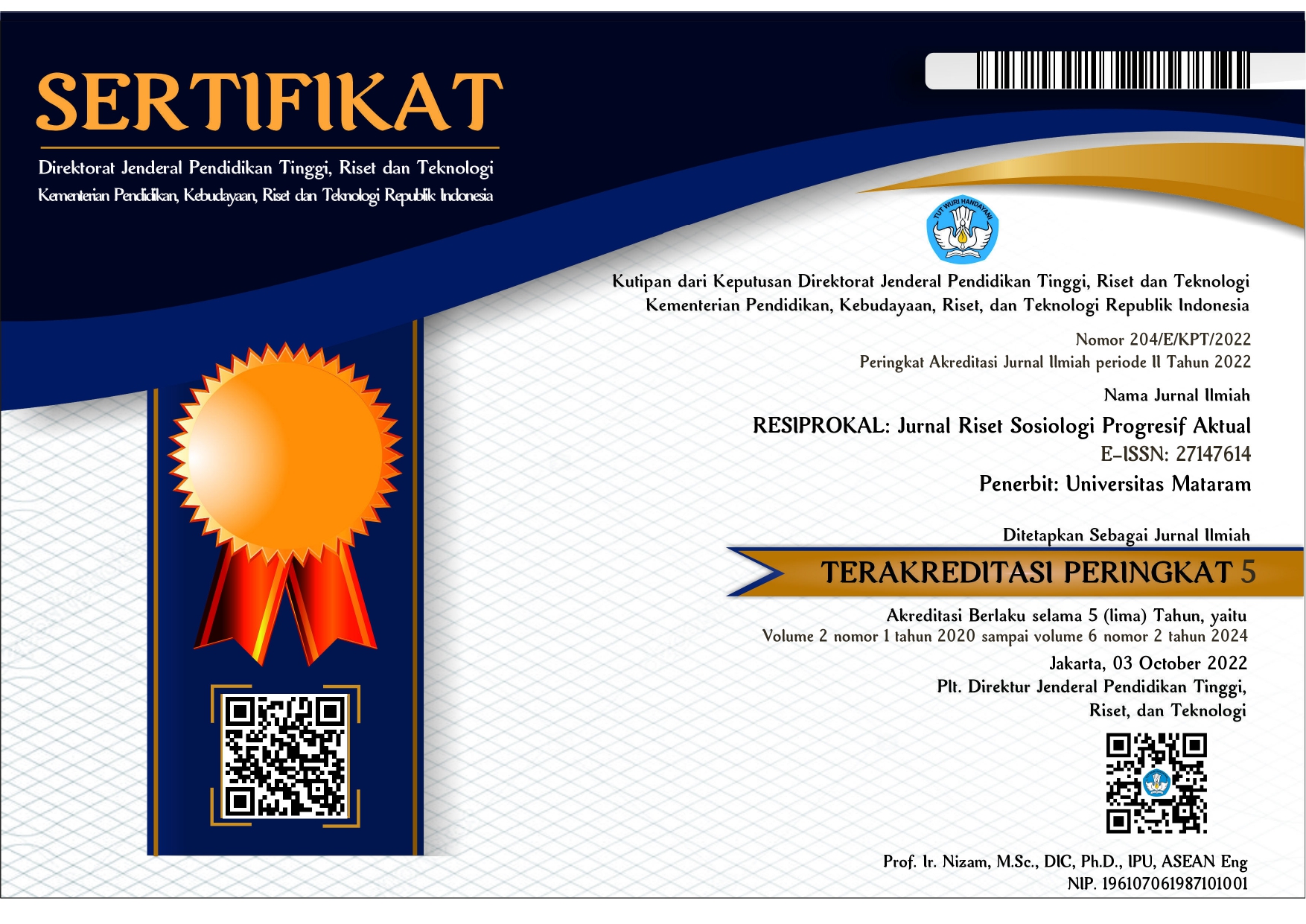
Harzeina, T., & Agustin, D. N. (2025). Menggali Persepsi Dan Pengalaman Stigma Sosial Mahasiswa Penerima Kartu Indonesia Pintar Kuliah (Kipk) Dalam Konteks Gaya Hidup Konsumerisme . RESIPROKAL: Jurnal Riset Sosiologi Progresif Aktual, 7(2), 35–49. https://doi.org/10.29303/resiprokal.v7i2.731
The Indonesia Smart Card Program for College (KIP Kuliah) is a form of government intervention to expand access to higher education for students from low-income families. Although this program provides significant financial benefits, KIP Kuliah recipients often face social stigma from their surroundings. This study aims to uncover the experiences and perceptions of KIP Kuliah recipient students regarding the social stigma they experience, especially in the context of lifestyle and consumerism. This study uses a qualitative approach with an in-depth interview method with three informants who are KIP Kuliah recipient students. The results of the study indicate that the stigma experienced by students includes negative labeling and stereotypes that associate the status of recipients with consumer behavior that is considered inappropriate, such as hanging out, traveling, and using expensive electronic goods. The public tends to judge only from the outside appearance without considering the context, such as academic needs, family support, or the results of students' personal efforts. From the perspective of Erving Goffman's stigma theory, this finding illustrates the tension between virtual social identity (public expectations) and actual social identity (student reality). In response to stigma, students demonstrate impression management efforts through academic achievement, organizational involvement, and adjusted lifestyles. This study concludes that although KIP Kuliah has succeeded in increasing access to education, recipients still face social challenges that require attention. An educational approach is needed to dismantle the stigma and build a more empathetic understanding of the social realities of students receiving educational assistance.
References
Amilia, A. A., Ans’harikhu, P., Bimantara, M. A. A., Suciani, L., Yanuar, A., & Rahmawati, P. (2020). Gerakan Ayo Kuliah Program Keluarga Harapan Untuk Memotivasi Siswa Melanjutkan Pendidikan Ke Perguruan Tinggi. Community Empowerment, 5(3), 177–185. Https://Doi.Org/10.31603/Ce.3986
Ardiansyah, M., Suharto, T., & Farid, A. S. (2022). Upaya Penanganan Uang Kuliah Tunggal (Ukt) Bermasalah Bagi Mahasiswa Yang Tidak Mampu Pada Perguruan Tinggi. Jiip - Jurnal Ilmiah Ilmu Pendidikan, 5(10), 4432–4441. Https://Doi.Org/10.54371/Jiip.V5i10.1036
Goffman, E. (1986). Stigma: Notes On The Management Of Spoiled Identity. Simon & Schuster Inc.
Hasbullah, M. W. (2022). Kekerasan, Stigma Dan Bangkitnya Kolektivisme Identitas (Studi Tentang Laskar Pemuda Pattingalloang Makassar). Jurnal Analisis Sosial Politik, 1(2), 109–120.
Irpan, I., Nasrullah, N., & Abdul Khaliq. (2024). The Influence Of Financial Literacy On Student Behavior In Managing Financial Kip-Kuliah Scholarship Funds. International Journal Of Economic Research And Financial Accounting (Ijerfa), 2(3). Https://Doi.Org/10.55227/Ijerfa.V2i3.78
Melati, M., Ayub, D., & Suhil, S. (2024). Sikap Konsumtif Mahasiswa Penerima Beasiswa Kip Kuliah Di Fkip Universitas Riau. Jurnal Pelita Pengabdian Masyarakat, 1(2), 11–23.
Moleong, L. J., & Surjaman, T. (2014). Metodologi Penelitian Kualitatif.
Salsabila, N. S., & Idrus, N. I. (2025). Boti: Stigma Terhadap Laki-Laki Feminin Di Lingkungan Kampus. Emik, 8(1), 24–43. Https://Doi.Org/10.46918/Emik.V8i1.2675
Sartika, Y. D., & Hudaniah, H. (2018). Gaya Hidup Hedonis Dan Intensi Korupsi Pada Mahasiswa Pengurus Lembaga Intra Kampus. Jurnal Ilmiah Psikologi Terapan, 6(2), 213–231. Https://Doi.Org/10.22219/Jipt.V6i2.7142
Triyas, A. P. A., Maulida, D. R. W., & Nathania, E. C. A. (2023). Realitas Tersembunyi: Praktik Dramaturgi Mahasiswa Penerima Beasiswa Kipk. Concept: Journal Of Social Humanities And Education, 2(4), 253–267.
Utami, W. (2018). Pengaruh Persepsi Stigma Sosial Dan Dukungan Sosial Terhadap Kesejahteraan Psikologis Pada Narapidana. Journal An-Nafs: Kajian Penelitian Psikologi, 3(2), 183–207. Https://Doi.Org/10.33367/Psi.V3i2.620
Wahyuni, R., Irfani, H., Syahrina, I. A., & Mariana, R. (2019). Pengaruh Gaya Hidup Dan Literasi Keuangan Terhadap Perilaku Konsumtif Berbelanja Online Pada Ibu Rumah Tangga Di Kecamatan Lubuk Begalung Kota Padang. Jurnal Benefita, 4(3), 548. Https://Doi.Org/10.22216/Jbe.V4i3.4194
Wardah Qurrotuaini, P., Puspitasari, D., Rohmah, N., Nurul Fatimah, A., & Yanti Hami Mullah, N. (2022). Analisis Perilaku Konsumtif Pada Mahasiswa Penerima Beasiswa Bidikmisi-Kip Kuliah Angkatan 2020 Uin Raden Mas Said Surakarta. Academica : Journal Of Multidisciplinary Studies, 6(1), 147–168. Https://Doi.Org/10.22515/Academica.V6i1.5718
Winata, R., & Khairunnisa, R. (2023). Pengaruh Penggunaan Dana Kip-K Terhadap Pemenuhan Kebutuhan Mahasiswa Dalam Prespektif Ekonomi Islam (Studi Pada Mahasiswa Penerima Kip- K Uin Raden Intan Lampung). Business And Enterpreneurship Journal (Bej), 4(1). Https://Doi.Org/10.57084/Bej.V4i1.1037
Yuliana, D. T., Fathoni, M. I. A., & Kurniawati, N. (2022). Penentuan Penerima Kartu Indonesia Pintar Kip Kuliah Dengan Menggunakan Metode K-Means Clustering. Journal Focus Action Of Research Mathematic (Factor M), 5(1), 127–141. Https://Doi.Org/10.30762/F_M.V5i1.570
License
Copyright (c) 2025 Tommy Harzeina, Dewien Nabielah Agustin